
Carpal Tunnel Treatment in Windsor

Our Windsor Chiropractors Treat Your Carpal Tunnel Pain

Carpal tunnel syndrome is a condition that occurs due to pressure on the median nerve, leading to hand problems. This nerve runs from the forearm to the hand through a tight space in the wrist called the carpal tunnel, which gives the syndrome its name.

Individuals often worry about the pain and challenges in using their hands caused by carpal tunnel syndrome, along with the suitable medical interventions. Luckily, aggressive treatments are usually not required for effective management. Here at Community Chiropractic Center, we assess your symptoms thoroughly to deliver tailored chiropractic care and resources, with the goal of alleviating discomfort and enhancing hand function.

Symptoms of Carpal Tunnel Syndrome:

The signs of this condition can vary depending on the level of pressure and compression on the nerve. Typically, people may feel constant numbness or tingling in the thumb and the first three fingers of the hand. Other symptoms include:

  • Hand weakness leading to dropping objects
  • Occasional numbness and tingling
  • Constant numbness

In many cases, carpal tunnel syndrome symptoms may start off as mild and sporadic numbness and tingling, often triggered by specific activities. For example, experiencing a numbing sensation while gripping a steering wheel or using a phone could be signs of carpal tunnel syndrome. Over time, symptoms may worsen, and some individuals may notice weakness in their hands, making it challenging to grasp objects.

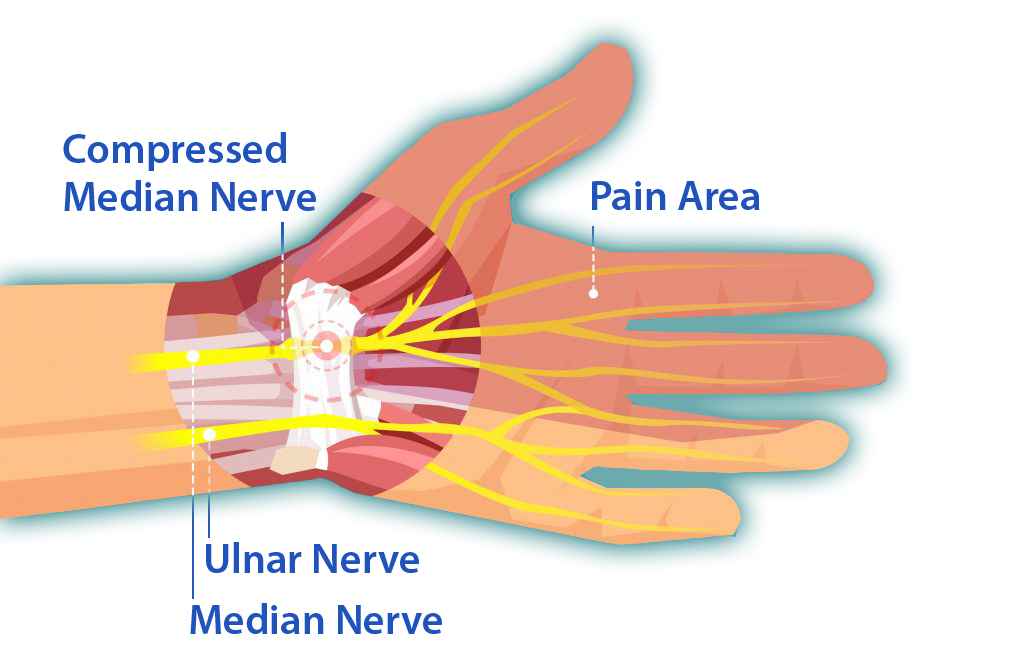
Carpal tunnel pain graphic

How Our Windsor Chiropractors Treats Carpal Tunnel Syndrome

The median nerve in the wrist, which can cause Carpal Tunnel Syndrome when compressed, connects to the spinal cord through openings in the bones around the lower neck. Misalignment or restricted movement of these spinal bones can result in wrist or finger problems. Chiropractic care can realign these bones, assisting in the management of CTS.

Early identification of Carpal Tunnel Syndrome enables non-surgical treatment, with chiropractic care as the primary method. This typically involves a variety of techniques, such as rest, ice, ultrasound, and electrical stimulation, including:

  • Chiropractic manipulation therapy for the elbow and upper spine, adjusting the soft tissues around the joints
  • Incorporating vitamin B6, known for its role in promoting CTS recovery, into the diet
  • Electro-acupuncture therapy
  • Bracing, a technique that restricts hand movement, applies pressure on the median nerve, aiding in recovery and reducing tendon inflammation
  • Wrist and hand exercises tailored for rehabilitation
  • Evaluation of workplace ergonomics to minimize stress effectively

Carpal Tunnel Syndrome can progress into a severe health condition, potentially necessitating surgery if not addressed promptly. Early intervention with chiropractic care provides a drug-free and efficient approach to relieve symptoms and discomfort associated with CTS, ensuring lasting relief.

If you have Carpal Tunnel symptoms, don’t wait to book an appointment with our Windsor chiropractor so we can help get you back to full health!

About Community Chiropractic Center

Community Chiropractic Center in Windsor, ON is a multidisciplinary wellness clinic offering chiropractic care, spinal decompression, shockwave, acupuncture, and more to our community. We are located on Tecumseh Road East, just north of E.C. Row Expressway. Our clinical team is here at convenient hours to help relieve your pain and achieve your health goals. Request your appointment with us today!

Common Questions About Chiropractic Care

An adjustment is a precise, hands-on correction to a joint in your spine that isn’t moving the way it should. When a joint in your spine isn’t moving the way it should, it can affect how that area moves and how the surrounding muscles and nervous system respond.

The adjustment is designed to restore motion and improve the way that area functions. From there, your body does the work — our job is to help create better conditions for it to do that.

That’s a question we answer individually, not generally.

Before anyone is adjusted at our clinic, we review your health history, complete a physical examination, and, where it’s warranted, take X-rays. That process tells us whether chiropractic care is appropriate for you, and it shapes how we adjust. Techniques are chosen to suit the person in front of us.

If what you’re dealing with isn’t suited for chiropractic care, we’ll tell you and point you toward the right provider.

People across a wide range of ages and circumstances. Spinal and joint problems aren’t limited to one stage of life; desk work and device use, sports, physical labour, past injuries, and everyday stress can all place demands on the spine.

The techniques we use vary depending on who we’re working with. The principle behind them doesn’t change.

Most people find adjustments comfortable, although some temporary soreness or tenderness can happen afterward.

If you’ve had a recent injury such as whiplash, the area may already be sensitive or inflamed, so you may notice some discomfort during or after treatment. We adjust the technique and amount of force to what you can comfortably tolerate.

We look at more than just how you feel on a given day. Pain matters, but it can fluctuate, so we also look at things like your movement, function, examination findings, and the activities you’re able to get back to.

We collect baseline information at the start and reassess you at planned points during care. Depending on your case, that may include physical examination findings, surface EMG scans that look at patterns of muscle activity along the spine, and x-rays where clinically appropriate.

Then we review the findings with you side by side. That gives us more than one way to judge whether things are moving in the right direction.

It varies more than people expect. Some patients feel a change quickly; for others it can take weeks or longer.

What affects it: what you’re dealing with, how long it’s been there, its severity, your age and general health, how you respond to care, and how much additional strain your daily life continues to place on the area.

Rather than guess, we set a point to reassess. At that visit we look at the data together and decide where to go from there.

That’s your call, and we mean that.

Some people finish their initial plan and come back only when something flares up. Others choose ongoing care because the demands of their work or sports keep putting the same stresses on their spine, and they’d rather stay ahead of it.

We’ll tell you honestly what we think the data shows and what we’d recommend. Then you can decide what fits your life and your budget, including how often you visit.

If ongoing care makes sense for you, we’ll help you find a frequency that fits your goals, your life, and your budget.

Insurance coverage varies for chiropractic care. Over 80% of Ontario insurance plans will reimburse you for a portion of your fees. However, most have a limit on what they will pay and do not pay for full corrective care programs.

We also offer direct billing when plans allow it. In our office, we don’t base your care plan on your availability of insurance, but offer a payment option to best suit your budget.